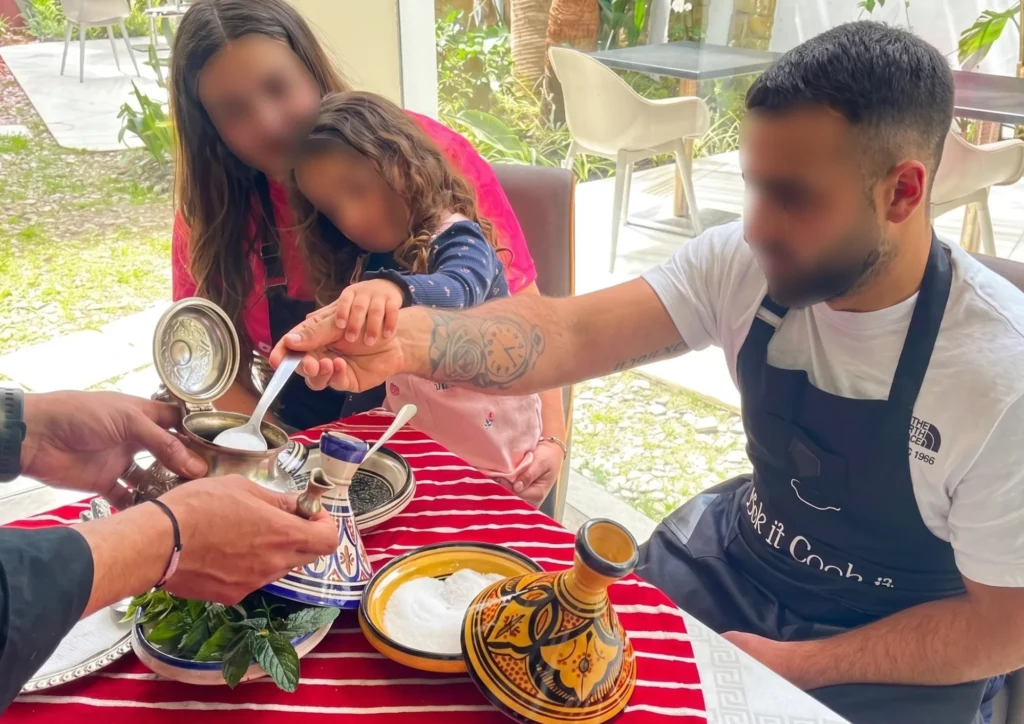
If you have ever sipped a glass of Moroccan mint tea in a riad or garden, you already know: this is not just a drink. It is a Moroccan tea ceremony — a ritual, a welcome, a moment of connection. In Morocco, making tea is an art form passed down through generations, and in Tangier, we call it atay.
In this guide, you will learn exactly how to follow this Moroccan mint tea recipe at home — the right herbs, the right technique, and the famous regga foam that makes it unmistakably Moroccan.
What Is Moroccan Mint Tea — Atay?
Moroccan mint tea, known locally as atay (اتاي) or atay ma’acheb, is a sweet green tea brewed with fresh spearmint (nana) and sometimes a mix of other aromatic herbs like lemon verbena (verveine), wormwood (chiba), or rose petals. It is served three times in a traditional Moroccan sitting, each glass slightly different from the last.
There is a famous Moroccan proverb that says:
“The first glass is as gentle as life, the second as strong as love, the third as bitter as death.”
This is why the ritual matters as much as the recipe.
What You Will Need
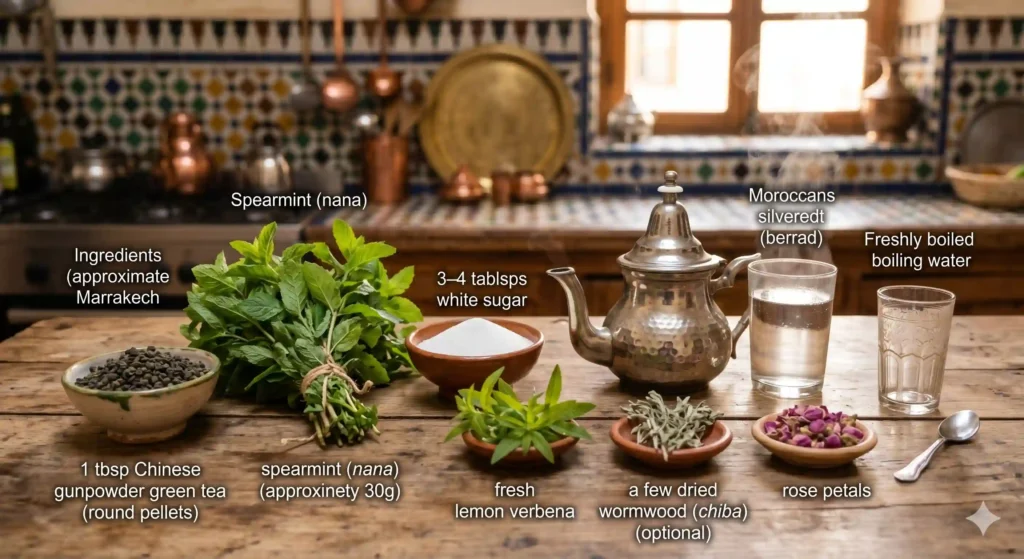
Ingredients (serves 4)
- 1 tablespoon Chinese gunpowder green tea
- 1 large bunch of fresh spearmint (nana) — about 30g
- 3–4 tablespoons of sugar (adjust to taste)
- 1 litre of freshly boiled water
- Optional: a few sprigs of fresh lemon verbena, wormwood, or rose petals
Equipment
- A traditional Moroccan teapot (barrad) — or any small metal or ceramic teapot
- A tea tray
- Small Moroccan tea glasses
Step 1: Rinse the Green Tea
Place the gunpowder green tea in your teapot. Pour a small amount of boiling water — just enough to cover the leaves — then immediately pour it away. This first rinse removes any bitterness and opens up the flavour of the leaves.
Why this matters: Skipping the rinse is the most common mistake beginners make. It results in tea that tastes sharp and bitter rather than smooth and floral.
Step 2: Brew the Base
Pour about 300ml of boiling water over the rinsed tea leaves. Let it steep for exactly 2 minutes — no more, no less. This gives you a strong, concentrated green tea base.
Common mistake to avoid: Steeping too long makes the tea bitter. Set a timer and stick to 2 minutes.
Step 3: Add the Fresh Mint and Sugar
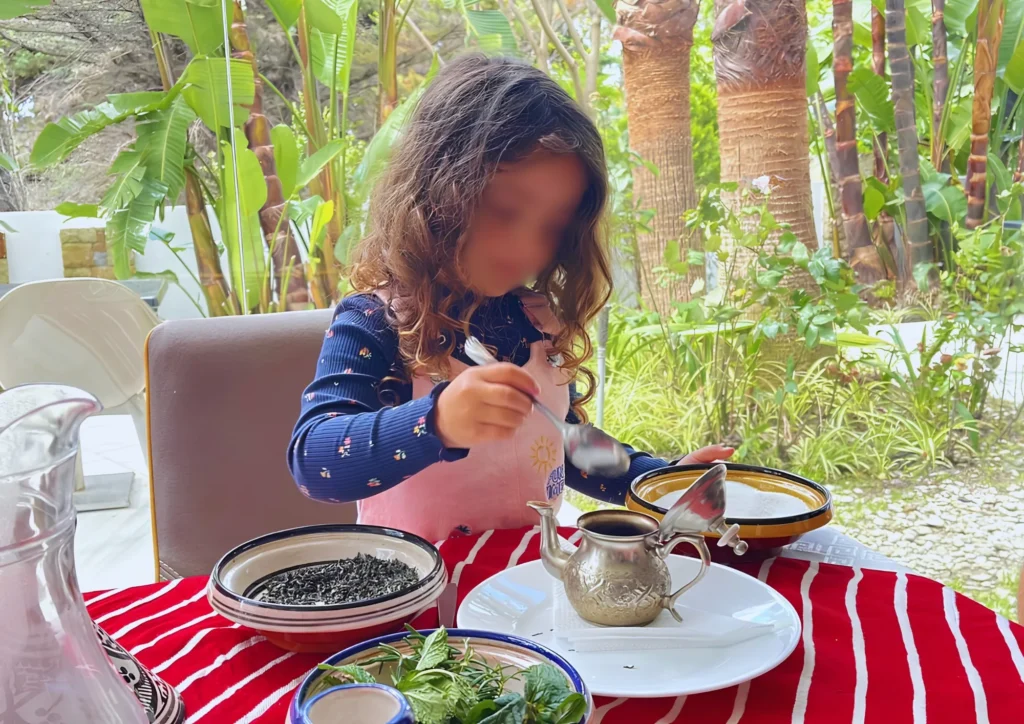
Add your fresh spearmint generously — do not be shy. Moroccans use a lot of mint. Add your sugar at this stage too. In Morocco, the tea is traditionally quite sweet, but you can reduce the sugar to your preference.
If you are using additional herbs like lemon verbena or wormwood, add them now alongside the mint.
Pro tip: At Pick It Cook It, we harvest our mint fresh from our 6000m² organic garden just minutes before preparing tea — the difference in flavour is extraordinary. If you can, always use fresh mint rather than dried.
Step 4: The First Pour — Building the Flavour
Pour the brewed tea into a glass, then pour it back into the pot. Repeat this 3 to 4 times. This process, called tqlib, blends the flavours together and begins to cool the tea slightly to the right temperature for drinking.
Why this matters: Tqlib is not just tradition — it helps dissolve the sugar completely and evenly distributes the flavour throughout the pot.
Step 5: The Famous Regga — Creating the Foam
This is the moment that separates a good Moroccan tea from a great one. Hold the teapot high above a glass — sometimes 30 to 50 centimetres above — and pour in one long, confident stream. This aerates the tea and creates regga, the beautiful foam that floats on top of each glass.
The regga is considered a sign of quality and skill. A tea without foam is considered unfinished.
Common mistake to avoid: Pouring from too low or too slowly. Commit to the height and the pour.
Step 6: Taste and Adjust
Before serving your guests, taste the first glass yourself. Adjust sugar if needed. The tea should be sweet, fragrant, slightly floral from the mint, and have a gentle warmth on the palate.
In Morocco, the person preparing the tea always tastes first — this is tradition, not greed.
Step 7: Serve with Moroccan Pastries
Moroccan mint tea is traditionally served alongside chebakia (sesame honey pastries), ghriba (almond cookies), or dates. The sweetness of the pastries complements the fresh bitterness of the mint beautifully.
At Pick It Cook It, guests enjoy their handmade tea with freshly prepared Moroccan pastries in our garden — a moment of calm that our guests never forget.
Troubleshooting Common Problems
The tea is too bitter:
You likely steeped the leaves too long or skipped the rinse step. Start again with a fresh rinse and keep your steeping time to 2 minutes maximum.
The tea has no foam:
Pour from higher up and faster. The height and speed of the pour is what creates the regga. Practice makes perfect.
The mint flavour is weak:
Use more mint — Moroccans are generous with it. Also make sure your mint is fresh, not wilted.
The tea tastes flat:
Try adding a small sprig of lemon verbena or wormwood. These herbs add depth and complexity to the flavour profile.
The Meaning Behind the Ritual
In Morocco, preparing tea for guests is one of the most generous acts of hospitality. To refuse a glass of Moroccan mint tea is considered impolite. To accept it — and to sit, talk, and drink together — is to participate in one of the oldest and most beautiful rituals of Moroccan life.
When we say atay ma’acheb in Tangier, we mean tea made with herbs — with care, with intention, and with love.
Want to Learn the Real Moroccan Tea Ritual in Tangier?
Reading about it is one thing. Doing it with your own hands in an organic herb garden, picking fresh mint seconds before brewing, and learning from a local guide — that is something else entirely.
At Pick It Cook It, our Plant It & Taste It experience invites you to:
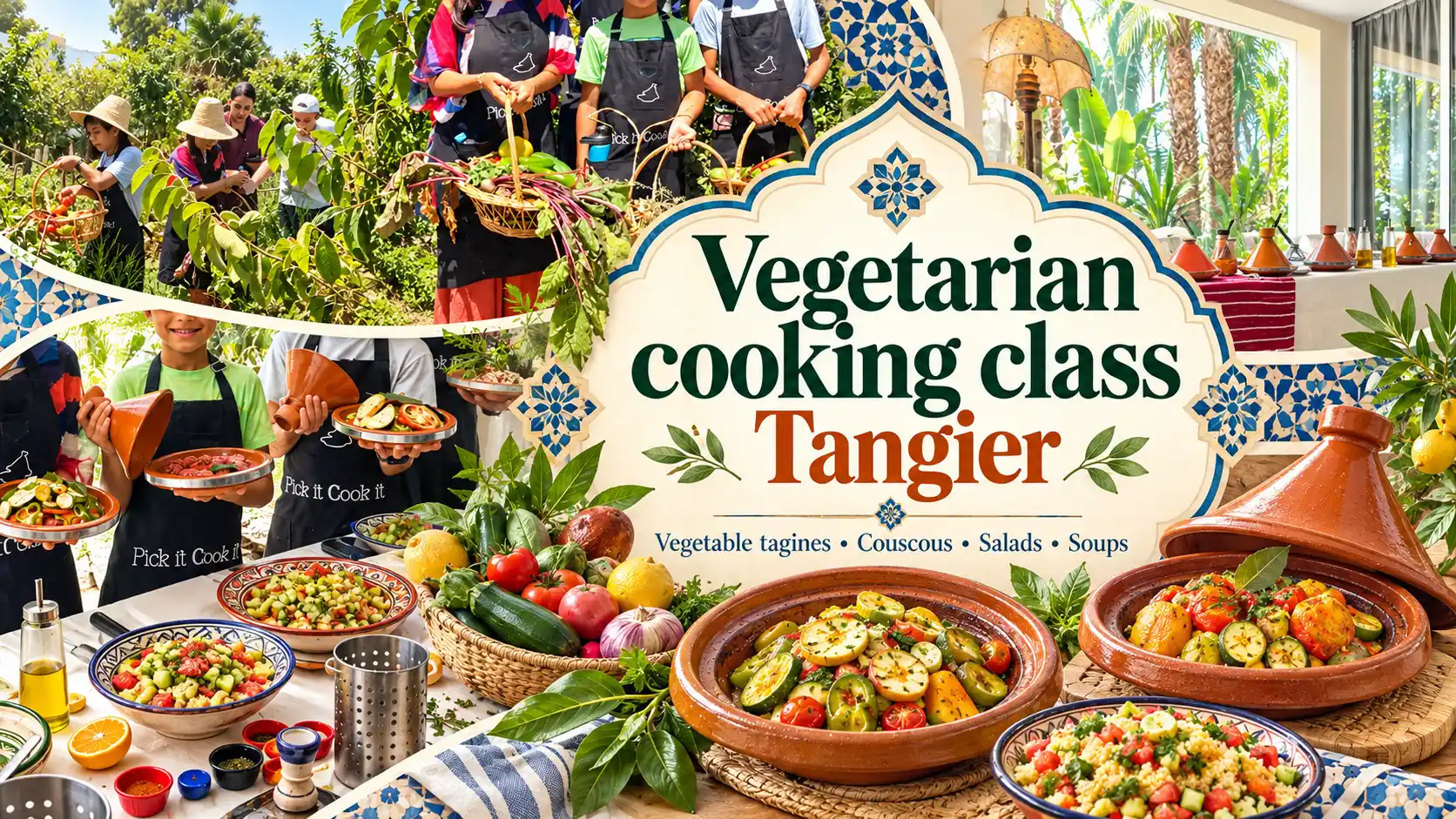
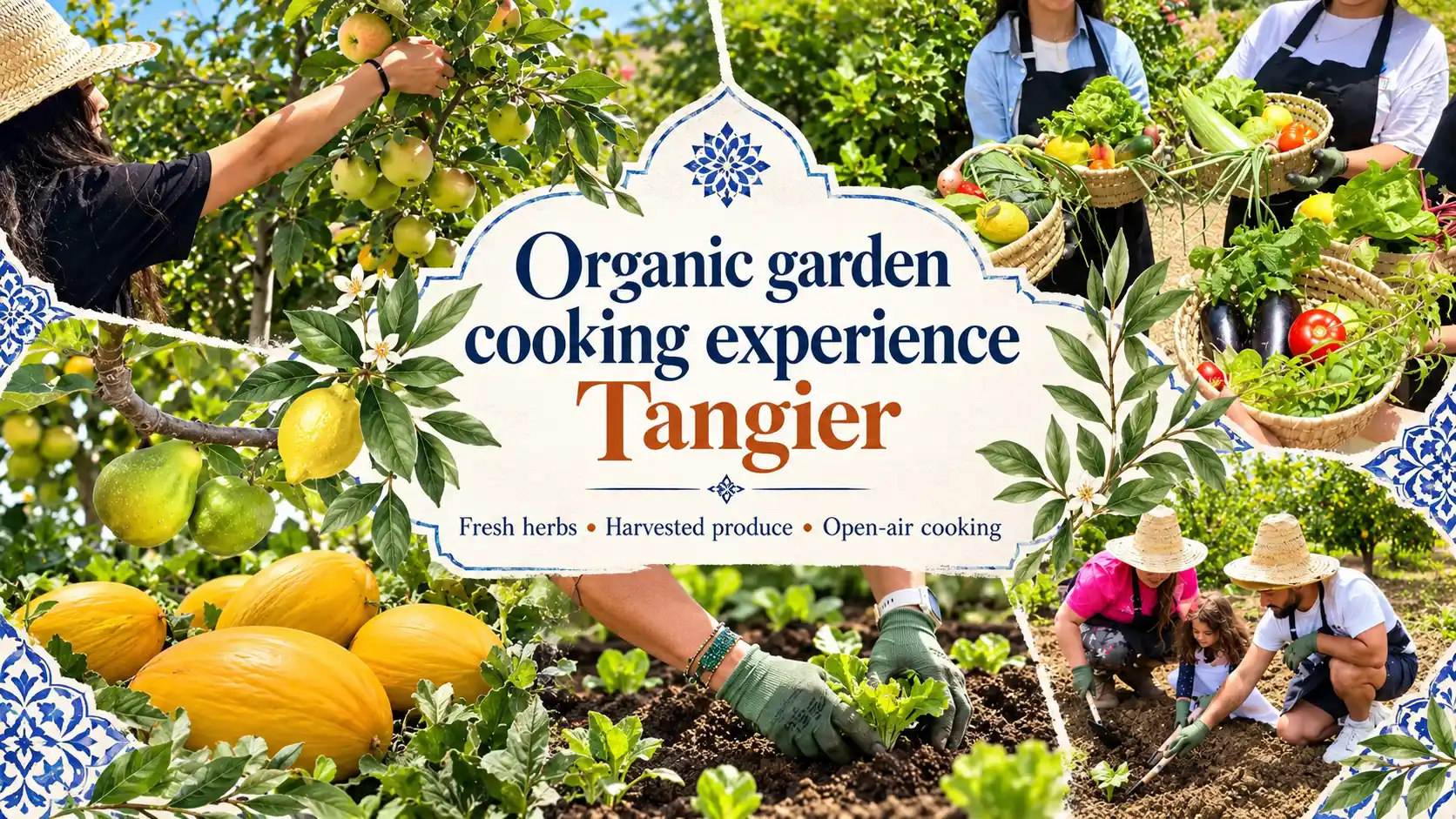
- Walk through our 6000m² organic garden and discover authentic Moroccan herbs
- Pick fresh spearmint, lemon verbena, and seasonal plants yourself
- Learn the full Moroccan tea ritual step by step
- Create your own regga foam and taste the difference
- Enjoy your tea with freshly made Moroccan pastries in a peaceful garden setting
From 50€ per person, minimum 4 guests.
👉 Book your Moroccan tea experience in Tangier
Frequently Asked Questions
What type of mint is used in Moroccan tea?
Moroccan mint tea uses nana spearmint — not peppermint. Spearmint is softer, sweeter, and more aromatic than peppermint, which can be overpowering in tea.
Can I make Moroccan mint tea without gunpowder green tea?
Gunpowder green tea is traditional and strongly recommended. It has a distinct smoky, round flavour that other green teas do not replicate well. It is widely available online and in Moroccan spice shops.
How sweet should Moroccan mint tea be?
Traditionally, Moroccan tea is quite sweet — sometimes 3 to 4 tablespoons of sugar per pot. That said, many people today use less. Add sugar gradually and taste as you go.
Why is it called Berber whiskey?
Moroccan mint tea is sometimes called “Berber whiskey” as a playful nod to the fact that it is Morocco’s most beloved social drink — enjoyed at every gathering, celebration, and daily moment of rest, much as wine or spirits might be in other cultures.
What does regga mean?
Regga (الرقة) means the foam or froth created on top of the tea when poured from a height. It is considered a mark of quality and skill in tea preparation.
Conclusion
Making authentic Moroccan mint tea is about more than following a recipe. It is about slowing down, being present, and sharing something meaningful with the people around you. The rinse, the steep, the tqlib, the high pour, the regga — each step has a reason and a history.
The next time you prepare a pot of atay, remember: you are not just making tea. You are carrying forward one of the most beautiful traditions in Moroccan culture.
Pick It Cook It is Tangier’s first immersive farm-to-table culinary experience, located in the scenic Mnar region. We offer organic garden workshops, Moroccan cooking classes, and traditional tea experiences for families, couples, and groups.